Latest: C5 FullGate boards arrive · Initial bench QA passedSee the update
Open-source experimental firmware · ESP32-C5

HELLZGATE SENSE

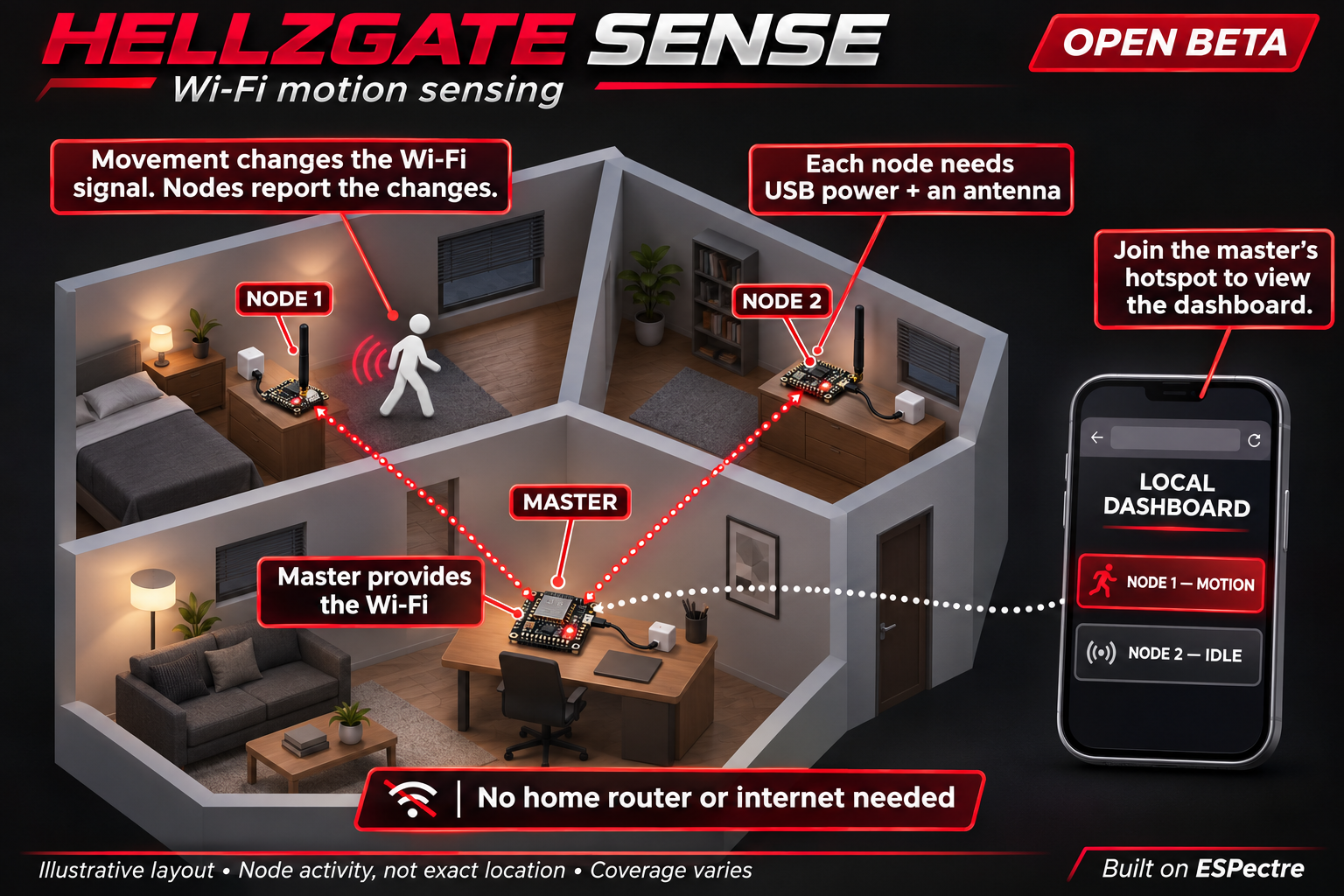
Place small Sense nodes with USB power and antennas around an area. They join the master's own 2.4 GHz Wi-Fi network. Movement changes the signal each node measures, and the local dashboard shows which nodes report activity.

Conceptual house: two USB-powered nodes connect directly to the master; a phone connects to the master's hotspot to view node activity
Illustrative layout. Each node connects directly to the master. The display shows node activity, not a person's exact location; coverage varies.

How it works

  1. Power the master and each antenna-equipped node by USB. The included flexible antennas worked in our testing and are easy to pack for portable setups. Keep an antenna attached to every module.
  2. Connect your phone or PC to the master's own hotspot. No home router or internet is needed.
  3. Open the master's local Sense page to see per-node activity and adjust sensitivity.

Sense and wireless surveying are selectable modes in the same beta firmware. Enabling Sense stops a survey recording; returning to Survey does not restart it.

What the beta proves

One master and two nodes passed a short USB bench check for connection, calibration, motion reports, per-node controls and switching back to Survey.

Range, false and missed triggers, separated-room reliability, larger node counts and integration on the final FullGate board still need testing. Node activity does not identify people, distinguish pets or guarantee room-level location. This is an experimental feature, not a validated alarm system.

Built on ESPectre. The combined Sense firmware is GPL-3.0-only; the earlier stand-alone ESP-NOW Survey beta has a separate MIT license. The planned carry, deploy and return-to-board use and phone app integration are future goals.